The history of the city
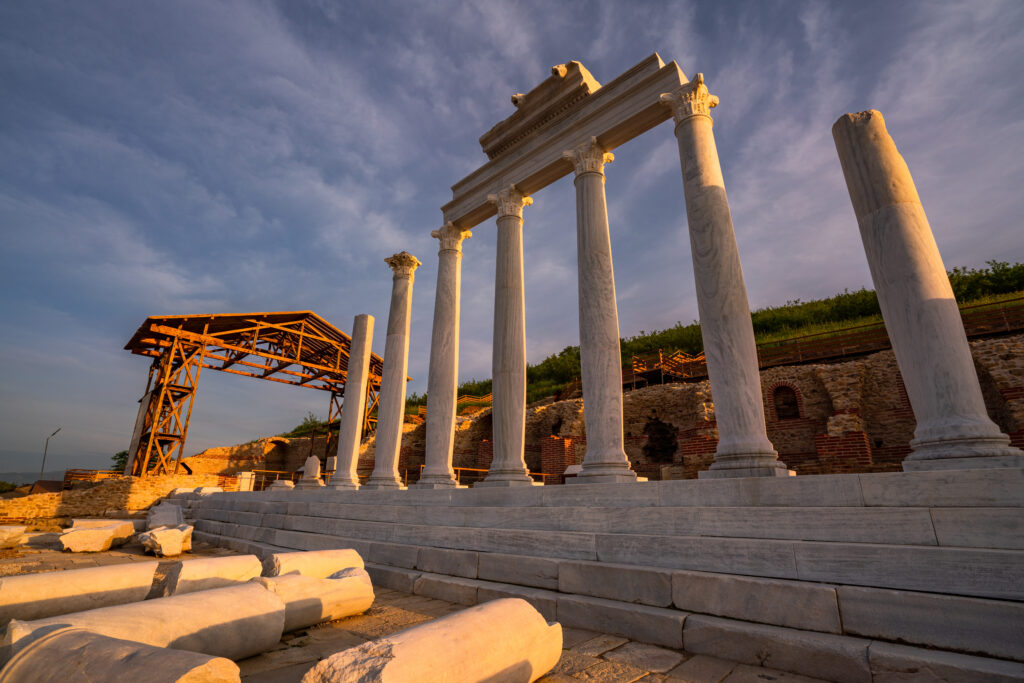
Heraclea Sintica is an ancient city in the Struma valley, on the south-western foot of Kozhuh hill next to today's Rupite. It was founded in the 4th century BC in the lands of the Thracian tribe of the Sintians and was one of the major cities of ancient Macedonia and later of the Roman province of Macedonia.
The city flourished in Roman times – with a forum, a civic basilica, streets with sewers, workshops and residential quarters. Severe earthquakes in the 4th and 6th centuries destroyed it, and Heraclea Sintica was gradually abandoned.
The city's name was a mystery for a long time. In 2002 a Latin inscription was found near Rupite – a letter from the emperors Galerius and Maximinus Daia from AD 308 addressed to the citizens of Heraclea Sintica. That settled where the city stood, and regular archaeological excavations began in 2007 and continue every summer.
What to see
The excavated parts of the forum and the civic basilica, the paved streets, the remains of houses and workshops. Among the best-known finds are the many terracotta figurines, mosaics and the marble statue of Hermes discovered in 2024 – many of them are kept in the History Museum in Petrich, 1.6 km from the hotel.
The site has a visitor centre with information boards. The excavations are in the open – wear comfortable shoes and bring water in summer.
How to get there from Petrich
By car: from Guest House Traikovi along the road to Rupite – about 11 km and 15 minutes. The site is right next to Rupite and the two are visited together in half a day.
Opening hours and the ticket price change by season – ask us at reception and we will check for you.